

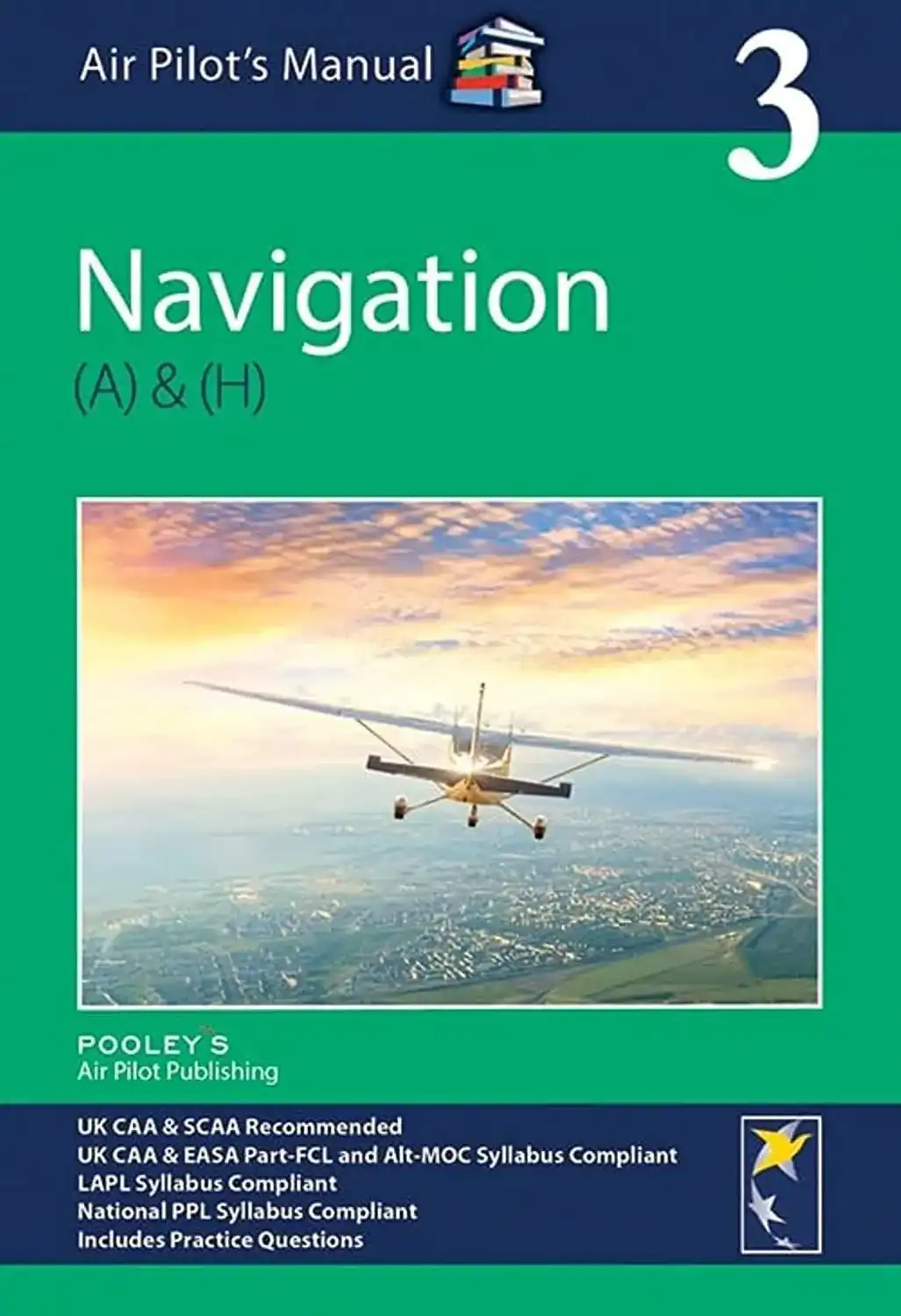
Air Pilot’s Manual Volume 3: Navigation by Dorothy Saul-Pooley (Paperback)
Book 3 of 7: Air Pilot's Manual
Volume 3 covers all navigation skills, from charts and compass use to dead reckoning and radio navigation. It teaches route planning, wind correction, fuel calculation and practical exercises to build confidence in exams and real flights...read the full blurb.
Limited Stock: only 1 left
| Weight | 502 g |
|---|---|
| Dimensions | 164 × 22 × 218 mm |
| Author | Dorothy Saul-Pooley |
| Book Series | Air Pilot's Manual |
| Book Series Order | Book 3 of 7 |
| Condition | New |
| Format | Paperback |
| Genre | Educational, How To |
| Publication Year | 2015 |
| Publisher | Pooleys Air Pilot Publishing Ltd |
Only logged in customers who have purchased this product may leave a review.
Volume 3 focuses on navigation, giving pilots the knowledge needed to plan and follow safe routes. It introduces chart reading, map symbols, and compass use, helping students understand how to determine position, course, and heading.
Readers learn to apply dead reckoning and pilotage, including the use of landmarks, timing, and estimated speeds. The volume also explains calculations for wind correction, fuel planning, and time en route, ensuring flights can be accurately planned and executed.
Radio navigation techniques are included, introducing VOR, NDB, and GPS systems. Students learn how to interpret signals, follow radials, and integrate electronic navigation with traditional methods. Safety procedures, cross‑checking techniques, and route planning exercises reinforce practical application.
Practical examples and charts help students visualise navigation challenges, showing how to combine theory with flight experience. Sample exercises at the end of each chapter give learners confidence in both exam preparation and real‑world flying.
By the end of this volume, pilots understand both traditional and modern navigation, giving them the tools to plan flights accurately, monitor progress, and adjust for changing conditions. Navigation becomes an essential skill that supports safety and efficiency in the cockpit.
More in the Air Pilot's Manual
-
Air Pilot's Manual Volume 1: Flying Training by Dorothy Saul-Pooley, Esther Law (Paperback)
Air Pilot's Manual Book 1 of 7In Stock£19.99 £25.00Save £5.01 20% -
Air Pilot's Manual Volume 2: Air Law & Meteorology by Dorothy Saul-Pooley (Paperback)
Air Pilot's Manual Book 2 of 7In Stock£19.99 £25.00Save £5.01 20% -
Air Pilot's Manual Volume 4: Aeroplane Technical by Dorothy Saul-Pooley, Philip Baxter (Paperback)
Air Pilot's Manual Book 4 of 7In Stock£19.99 £25.00Save £5.01 20% -
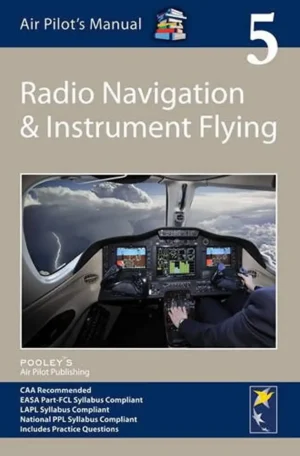
Air Pilot's Manual Volume 5: Radio Navigation & Instrument Flying by Jonathan Shooter (Paperback)
Air Pilot's Manual Book 5 of 7In Stock£19.99 £30.00Save £10.01 33% -
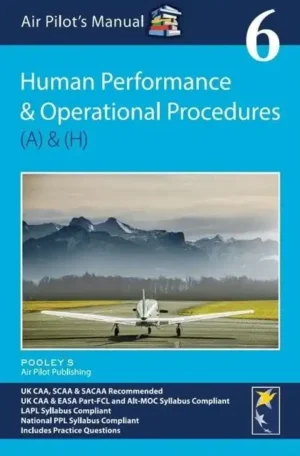
Air Pilot's Manual Volume 6: Human Performance & Limitations and Operational Procedures by Dorothy Saul-Pooley (Paperback)
Air Pilot's Manual Book 6 of 7In Stock£19.99 £25.00Save £5.01 20% -
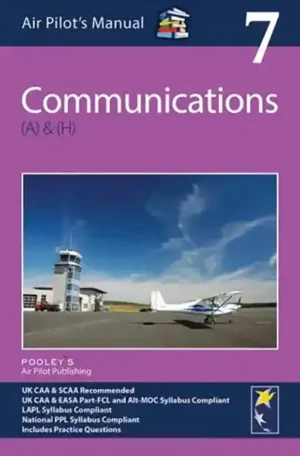
Air Pilot's Manual Volume 7: Communications by Helena Hughes (Paperback)
Air Pilot's Manual Book 7 of 7In Stock£19.99 £22.00Save £2.01 9%
Reviews
There are no reviews yet.